Book Commercial Waste Clearance for Portobello Road Businesses
Posted on 07/09/2026

If you run a shop, cafe, gallery, studio, office, or hospitality venue near Portobello Road, waste has a way of showing up at the worst possible moment. Old stock, packaging, broken furniture, display materials, kitchen rubbish, and end-of-lease clutter can pile up quickly. The result is usually the same: staff lose space, customers notice the mess, and you spend more time dealing with bins than running the business.
That is where Book Commercial Waste Clearance for Portobello Road Businesses becomes a practical, not just convenient, decision. A well-planned clearance keeps your premises tidy, helps you avoid blocked access and unpleasant smells, and supports a more professional front of house. It also reduces the risk of handling waste badly, which in London can create avoidable compliance headaches. In this guide, we'll walk through how it works, what to expect, the common pitfalls, and how to choose the right approach for your business.
Portobello Road has its own rhythm. Busy footfall, tight access, deliveries competing with shoppers, and properties that are rarely simple to service. So let's make this useful and plain-English. No fluff. Just the kind of advice you can actually use on a working day.
Why Book Commercial Waste Clearance for Portobello Road Businesses Matters
Commercial waste clearance is more than "getting rid of junk." For businesses on or around Portobello Road, it is part of keeping the operation smooth, safe, and presentable. The street attracts a constant mix of shoppers, locals, tourists, traders, and delivery traffic. That means clutter can become visible fast, and visible clutter can quietly affect how people judge your business.
Think about a boutique with stacked cardboard, a cafe with broken chairs out back, or a small office trying to store redundant monitors in a corridor. None of that looks great. And if there's a fire exit, shared passage, or narrow yard involved, it can be a real safety issue too. To be fair, most businesses do not start with bad intentions; they simply run out of time, space, or staff capacity.
There is also the legal and practical side. Businesses are expected to manage their waste responsibly. That means using a reputable collector, keeping disposal organised, and not assuming that "someone will sort it out later" counts as a plan. If you want a broader sense of how waste support fits into the area, the general commercial waste removal service in Notting Hill is a useful place to understand the bigger picture.
For Portobello Road businesses specifically, clearance matters because of:
- Presentation: customers notice entrances, back-of-house areas, and pavement-facing storage.
- Space efficiency: spare room is valuable, especially in compact London premises.
- Operational flow: clutter slows teams down and makes stock handling awkward.
- Health and safety: rubbish can create trip hazards, blocked exits, and pest attraction.
- Reputation: a tidy business looks cared for, even before anyone walks in.
Practical takeaway: the best commercial clearance is the one you barely have to think about. It happens at the right time, in the right way, with the least disruption to your trading day.
How Book Commercial Waste Clearance for Portobello Road Businesses Works
The process is usually simpler than people expect. Good clearance providers aim to make it straightforward, especially for businesses that cannot afford much downtime. You describe the waste, the location, access details, and timing. Then the collection is arranged around your trading hours where possible.
In many cases, the workflow looks like this:
- Initial enquiry: you explain what needs removing, roughly how much there is, and whether it includes bulky or awkward items.
- Assessment: the provider may ask for photos or a written list so they can understand volume and access.
- Quote or estimate: you receive a price based on waste type, labour, loading time, and any special handling.
- Booking: a collection time is set that suits your premises, often outside peak trading hours if needed.
- On-site clearance: the team loads the waste, checks access points, and removes items efficiently.
- Sorting and disposal: reusable, recyclable, and non-recyclable waste should be separated where possible.
- Completion: the site is left clear, and you should receive confirmation of what was taken.
If the waste is mixed, it helps to sort it before the team arrives. Not perfectly, just sensibly. Cardboard together, timber together, broken furniture together, electricals kept separate if possible. It speeds everything up and can improve clarity on pricing too.
For businesses that also handle fit-out debris or refurbishment leftovers, it may be worth looking at builders waste disposal in Notting Hill, since many clearance jobs sit somewhere between general commercial waste and light construction waste. That overlap is common in Portobello Road shops doing refits or seasonal changes.
And if what you really need is a more general tidy-up of mixed refuse, the broader waste clearance service in Notting Hill may fit the job neatly. Different premises, different mix of waste. Same principle: remove it properly and without making a mess of the day.
Key Benefits and Practical Advantages
There are obvious benefits, and then there are the quieter ones that only become obvious once the clutter is gone. The obvious one is space. But the real value is often in how much smoother your business feels afterwards.
- More usable floor and storage space: staff can move, stock can be stored properly, and your back room stops feeling like a no-go zone.
- Better customer impression: clean premises signal care, order, and professionalism.
- Less staff distraction: your team focuses on serving customers instead of lifting rubbish around.
- Reduced risk of odours and pests: especially important for food, retail, and hospitality premises.
- Safer walkways and exits: useful in cramped basements, corridors, yards, and shared access routes.
- Lower stress during refurbishments: if you're changing displays or fitting out a unit, waste clears the path for work to proceed.
There is also a timing advantage. A well-timed clearance can happen before opening, after closing, or in a delivery window. That matters around Portobello Road, where traffic and pedestrian movement can be awkward. You do not want a van blocking access while customers are trying to get in for coffee, or worse, while stock is being delivered.
Another practical win: good clearance teams can deal with mixed items in one visit. Old desk? Fine. Office chairs? Fine. Rubbish bags? Fine. A battered display unit that has been leaning in the corner for three months? Also fine. No drama.
Who This Is For and When It Makes Sense
This service suits a wide range of businesses, and not only the ones that are visibly messy. Some of the tidiest-looking premises still need regular clearance because waste builds up behind the scenes.
You may need commercial waste clearance if you run:
- a retail shop with packaging, damaged stock, or display changes
- a cafe, deli, or restaurant with kitchen or seating replacement waste
- a salon or clinic with old furniture, equipment packaging, or product waste
- an office with archived materials, broken furniture, or redundant electronics
- a gallery, studio, or creative space with installation leftovers
- a small hospitality venue dealing with periodic deep cleans or refits
It also makes sense when you are:
- moving out of a unit
- preparing for a shop refit
- clearing after an inventory refresh
- reducing back-of-house clutter before a busy season
- responding to an urgent spillover of waste after a sudden event, delivery problem, or closure
For some businesses, this is a regular housekeeping task. For others, it is a one-off rescue mission. Both are valid. Honestly, both happen more often than people admit.
If your team is mostly office-based, you may find the more specific office clearance option more relevant. And if your waste is mostly bulky household-style items from a mixed-use site, the practical approach may be closer to rubbish collection in Notting Hill. The right fit depends on the waste mix, not the label on the tin.
Step-by-Step Guidance
If you want the smoothest experience possible, a little prep goes a long way. Here is a practical approach that works well for busy Portobello Road businesses.
- Walk the premises first. Look beyond the main sales area. Check stock rooms, basements, corridors, loading areas, and any shared access spaces.
- Make a simple waste list. Write down what needs removing and how urgent it is. Keep it plain: chairs, boxes, shelving, broken appliance, packaging, mixed rubbish.
- Take clear photos. This helps with estimates and avoids misunderstandings. One or two good images are better than a long guess.
- Flag access constraints. Narrow stairs, timed entry, no parking, restricted loading, or limited lift access should be mentioned early.
- Choose a sensible time slot. Early morning and later evening often reduce disruption. Midday collections can be tricky on busy streets.
- Separate hazardous or restricted items. If something is oily, sharp, heavy, or electrical, say so upfront.
- Prepare the area. Move fragile stock away, clear a path to the items, and make sure someone is available to answer questions on arrival.
- Confirm what happens after collection. Ask how the waste will be handled, and keep any paperwork or confirmation.
A tiny bit of organisation saves a surprising amount of time. It also stops that awkward moment where a team arrives and everyone starts pointing in different directions. You know the one.
If you are comparing ways to deal with bulky items, it can help to read about rubbish tips for W11 shops on Portobello Road. That kind of local insight is especially useful for tight street frontage and mixed retail stock.
Expert Tips for Better Results
Here's the part that tends to save time, money, and stress. Small decisions up front make the whole job cleaner.
- Book before the waste becomes urgent. Emergency clearances are possible, but planning ahead gives you more choice and usually a calmer day.
- Group similar items together. If the team can load in one rhythm rather than keep switching between item types, the job tends to move faster.
- Be specific about heavy items. A "few chairs" can mean very different things depending on style, size, and weight.
- Think about trading hours. A collection that avoids your peak footfall is often worth more than one that is simply cheaper.
- Ask about recycling and reuse. Some items can be separated out for recycling, which is better for the environment and often a better business story.
- Keep one person in charge. Too many decision-makers on site can slow everything down. One contact, one voice.
In our experience, the businesses that get the best result are not necessarily the biggest. They are the ones that give clear instructions and leave room for the clearance team to work without constant interruptions.
Another useful move is to think in terms of service fit. If your waste includes old tables, shelving, or display units, furniture removal in Notting Hill may be relevant. If you are clearing out appliances from a cafe or kitchen, then white goods and appliance disposal can be the better match. Matching the job to the right clearance type usually leads to a smoother quote and less back-and-forth.
Little detail, big difference. That's often how these jobs work.
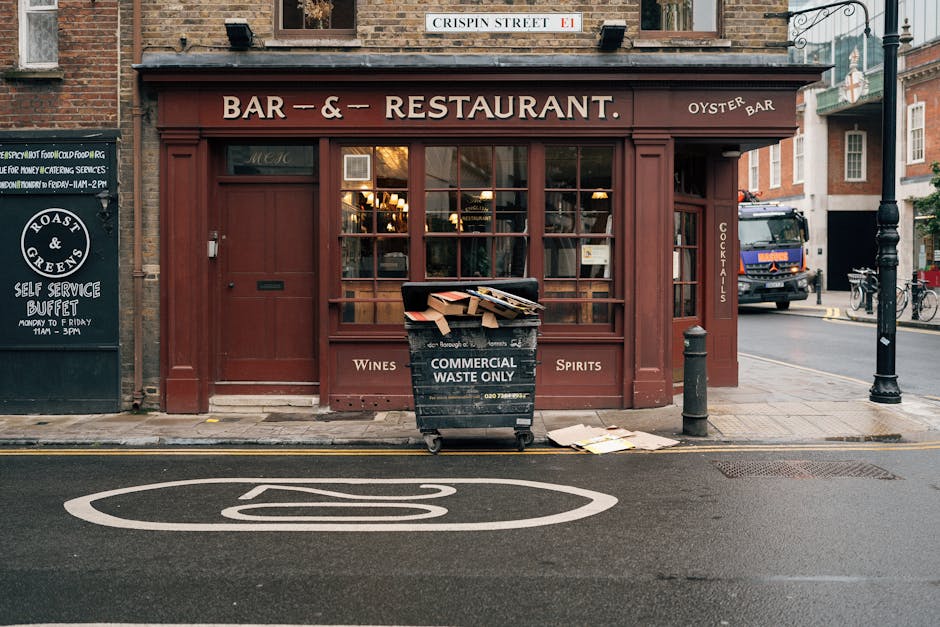
Common Mistakes to Avoid
Most clearance problems are not dramatic. They are small avoidable missteps that snowball. Annoying, yes. Complicated, not really.
- Leaving booking too late: this often forces you into rushed arrangements, awkward timing, or a higher stress level.
- Underestimating volume: what looks like "a few bags" can turn into a full van once it's gathered properly.
- Ignoring access issues: narrow stairs, parking limits, or limited loading space can change the whole plan.
- Mixing waste types without warning: electricals, bulky furniture, cardboard, and general rubbish should not be treated as identical.
- Assuming every provider works the same way: they really do not. Some are better at office waste, some at bulky items, some at mixed clearances.
- Forgetting about compliance paperwork: if you need records for your own files, ask before the job starts.
One common mistake is treating waste as an afterthought. It never stays an afterthought for long. The bag in the corner becomes five bags. The spare chair becomes six broken chairs. Then suddenly the storeroom is full and everyone is mildly irritated.
Another is not checking how the waste will be dealt with after collection. For many businesses, especially those keen on sustainability, that matters. If recycling and reuse are important to you, use a provider that can explain their process clearly. The page on recycling and sustainability is a helpful reminder of why that matters in everyday clearance work.
Tools, Resources and Recommendations
You do not need a lot of tooling to organise a good clearance. A few simple habits are enough.
- Phone camera: take clear images of the items, the access route, and any awkward corners.
- Basic inventory note: a simple list of what is being removed prevents confusion.
- Floor plan or quick sketch: especially useful for basements, split-level shops, or office units with multiple storage points.
- Calendar reminder: schedule the clearance before your next delivery, event, or fitting date.
- Internal checklist: who opens up, who supervises, who signs off, who checks the area afterwards.
For business owners wanting to see the wider range of related support, the services overview is useful for understanding how different clearance types fit together. And if you are still comparing how a collection fits into your broader waste routine, the waste disposal guidance is worth a look too.
When the priority is speed, it can also help to understand the difference between same-day and scheduled collections. There's a neat practical discussion on same-day versus scheduled rubbish picks that can help you decide which timing suits your trading pattern better.
Law, Compliance, Standards, or Best Practice
Waste handling for businesses is not something to improvise. Even when the job seems small, it is worth treating disposal carefully and sensibly. In the UK, businesses have responsibilities around how their waste is stored, passed on, and collected. The exact duties can vary depending on the waste type, the premises, and who is handling it, so it is wise to keep things simple and documented.
As a rule of thumb, look for a provider that can explain how they handle waste, whether they are appropriately licensed or registered where required, and how they separate recyclable material from general refuse. That is not just about ticking a box. It helps protect your business if questions arise later.
If a provider cannot clearly explain their process, that is a mild red flag. Not a full alarm bell, but enough to make you pause. You would not hand over stock to someone who could not tell you where they were taking it, right?
Useful best-practice points include:
- keep records of what was collected and when
- separate clearly identifiable waste streams where practical
- avoid leaving waste on pavements or shared access areas
- do not assume "commercial" means "anything goes"
- check the provider's terms before the job starts
There are also wider trust and safety concerns. If you want to better understand the standards behind responsible collection, the page on waste carrier licence and compliance is an especially relevant reference point. Safety and insurance matter too, particularly for buildings with narrow stairs, shared access, or fragile interiors. That is why insurance and safety should never be an afterthought.
For Portobello Road businesses, compliance is not about overcomplicating things. It is about making sure waste leaves your premises cleanly, legally, and without causing trouble for you or your neighbours. Fairly straightforward, really, but worth doing properly.
Options, Methods, or Comparison Table
Businesses usually have a few ways to deal with commercial waste. The right one depends on volume, timing, and what the waste actually is. Here's a practical comparison.
| Method | Best for | Pros | Watch-outs |
|---|---|---|---|
| Scheduled commercial clearance | Regular, planned waste removal | Predictable, tidy, easy to budget | Less flexible if you suddenly need space cleared fast |
| Same-day clearance | Urgent overflows, last-minute changes, busy trading periods | Fast response, quick relief from clutter | May need more flexibility on time and access |
| One-off deep clearance | Refits, closures, stockroom resets, move-outs | Big impact in one visit, clears space properly | Requires good prep and accurate volume estimate |
| Mixed waste collection | Businesses with cardboard, furniture, bags, and small equipment together | Convenient, practical, less coordination | Needs clear item descriptions to avoid surprises |
For many Portobello Road businesses, the best answer is not a single method forever. It is usually a blend. A scheduled clear-out now and then, with the option to move faster during busy weeks. That balance keeps operations feeling manageable.
Case Study or Real-World Example
A small independent shop near Portobello Road had a familiar problem: stock rotation had gone fine for months, then a seasonal refresh created a pile of old display stands, packaging, broken shelving, and cardboard that nobody quite had time to deal with. The back room became the temporary home for everything nobody wanted to think about.
By the time the team looked properly, the problem had grown. Staff were working around the clutter, the store room door was awkward to open, and deliveries were starting to feel messy. Nothing catastrophic, but enough to drag the whole operation down a bit.
They booked a clearance visit for a quiet morning before opening. The team arrived, reviewed access, confirmed what was going, and removed the waste in one pass. The job was not glamorous. It was just efficient. But the difference afterwards was obvious: better storage, less stress, and a cleaner space for the new display setup.
That is a very common pattern. The waste itself is usually not the issue. The real issue is how long it sits there while everyone works around it. Once cleared, the space feels bigger than you remember. Almost surprisingly so.
Practical Checklist
Use this simple checklist before you book:
- List all items that need removing
- Separate bulky items from general rubbish where practical
- Take clear photos of the waste and access points
- Note stairs, lifts, parking limits, and narrow entryways
- Choose a collection window that reduces disruption
- Confirm whether any items need special handling
- Ask how the waste will be sorted or recycled
- Keep a record of the collection for your files
- Make sure staff know who is meeting the team on arrival
- Check the cleared area afterwards for anything missed
If your premises also needs non-commercial clearances from time to time, it can help to compare related services such as house clearance in Notting Hill or furniture disposal in Notting Hill. That is especially useful for mixed-use properties or businesses with flat-storage above the shop.
Conclusion
Booking commercial waste clearance for Portobello Road businesses is really about keeping your operation sharp, safe, and ready for trade. Whether you run a small retail unit, a cafe, an office, or a creative workspace, the right clearance plan saves time and prevents rubbish from becoming a daily nuisance.
The key is simple: be clear about what needs removing, choose a timing window that suits your business, and work with a provider that treats compliance, safety, and recycling seriously. Do that, and the job becomes one less thing on your list. Which, let's face it, is exactly what most business owners want.
Portobello Road has enough movement, noise, and energy already. Your waste clearance should be the easy part. Quietly handled, neatly done, and out of the way before the day gets busy again.
Get a free quote today and see how much you can save.